When Our Own Wounds Shape How We Help: The Wounded Healer in Clinical Work
Most of us did not end up in this field by accident.
Somewhere along the way, we were shaped by our own wound, experiences of not being seen, not being safe, not being held in the ways we needed. And in response, something in us turned toward healing. Toward understanding. Toward wanting to offer to others what we ourselves did not receive enough of.
This is the heart of the archetype of the wounded healer.
It’s both the source of our deepest strengths and the seed of some of our greatest vulnerabilities.
How our wounds become our clinical strengths
When we’ve lived through shame, abandonment, chaos, or chronic misattunement, we often develop:
a heightened sensitivity to others’ emotional states
a deep reverence for safety and consent
a finely tuned capacity for attunement
a low tolerance for inauthenticity
We know what it feels like to be on the other side of the room, to be the one who is frightened, fragmented, or flooded.
And because our bodies remember, our nervous systems often orient naturally toward creating the very conditions we once needed:
Soft eyes.
A regulated tone.
A slower pace.
Space for silence.
These are not just techniques. They are ways our own healing has taught us to be with another human being.
How our wounds can become vulnerabilities in the work
Of course, the same sensitivities that enrich our work can also leave us more exposed.
Our own unhealed shame can get hooked by a client’s self-attack.
Our old attachment patterns can echo in transference and countertransference.
Our nervous systems can quietly move into fight, flight, or collapse when we’re faced with familiar dynamics: criticism, withdrawal, idealization, or dependency.
We might:
over-function to avoid feeling helpless
struggle to set limits because “no” feels dangerous
take responsibility for the client’s progress in a way that leaves us depleted and quietly resentful
feel like frauds when our own symptoms flare, even as we help others regulate and heal
From a nervous system perspective, these moments are not evidence that we’re unfit for this work. They are evidence that our bodies are still trying to protect us, often using strategies that were once adaptive but are now outdated.
The invitation is not to eradicate these wounded parts, but to befriend them. To bring them into the light of awareness and compassion so they can become sources of wisdom instead of blind spots.
A brief practice: tending the wounded healer in you
Here’s a simple, nervous-system-informed practice you might explore, especially after a session that leaves you stirred up, ashamed, or questioning yourself.
1) Pause and name what’s happening
Gently acknowledge:
“Something in me is really activated right now.”
Or:
“My wounded healer is very alive in this moment.”
Naming shifts us from being the state to observing the state.
2) Orient to here and now
Let your eyes move slowly around the room. Notice 3 to 5 objects, shapes, colors, or textures. Feel the chair supporting you, your feet on the floor.
This helps your nervous system register that you are not back in the old story, even if it feels that way.
3) Hand to body, with consent
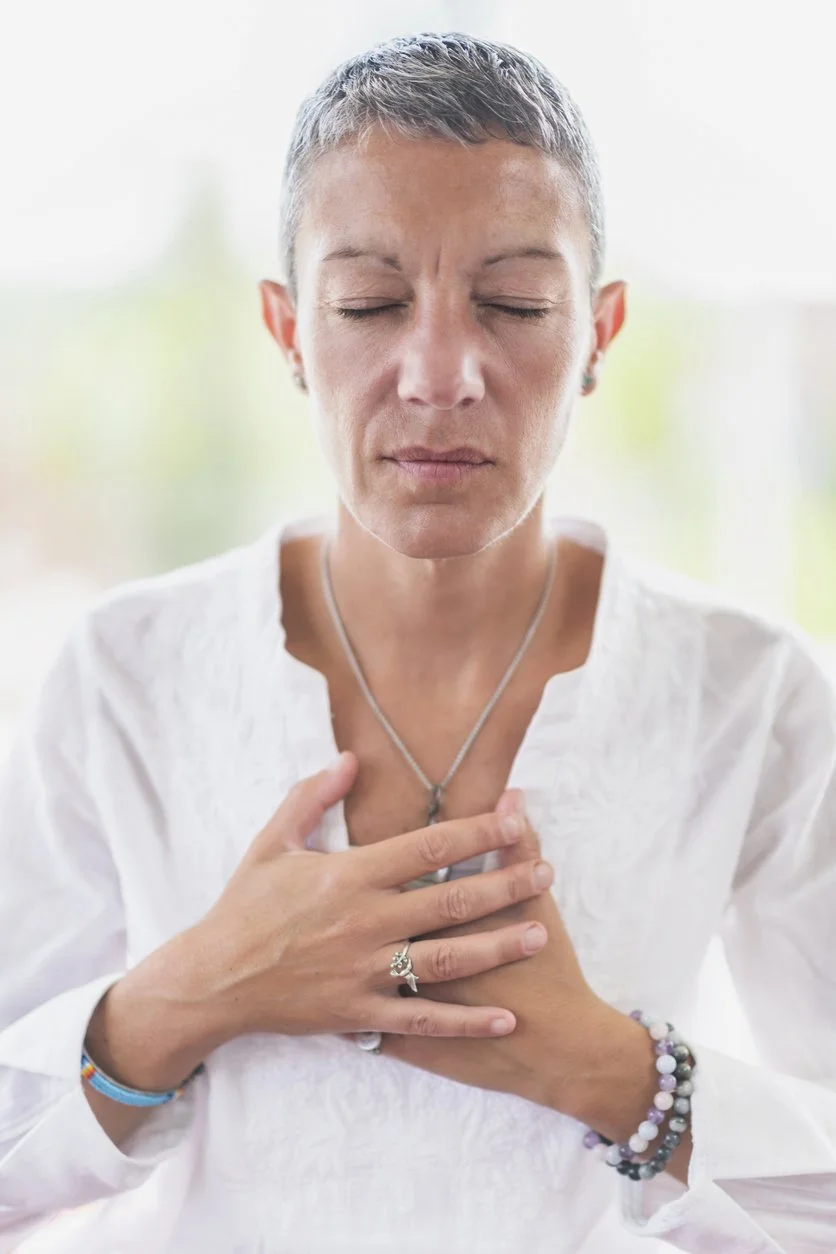
Place a hand on your chest or upper abdomen and see if your body allows that touch. If it does, feel the contact and warmth. Let your exhale lengthen slightly, maybe in for 4, out for 6, for a few breaths.
4) A compassionate reframe
When there’s a bit more space, offer yourself a phrase such as:
“Of course, this touched me. I know this terrain.”
“My sensitivity is part of what makes me good at this work.”
“I can be both wounded and wise.”
This isn’t self-indulgence. It’s tending the instrument through which all our clinical work flows: our own nervous system and embodied presence.
If you are drawn to cultivating a more grounded, less efforting, more attuned way of being with clients, this is central to the Professional Presence Program.